
 Free UK Mainland Delivery on Orders Over £100* -
 Perching Stool Buying Guide
Perching stools are height‑adjustable seats built at a slant. They are designed to allow users to safely perch on the stool, in turn reducing pressure and strain on the legs, back, and joints.
This guide will walk you through everything you need to know before buying a perching stool. We’ll look at how perching stools are beneficial, who can benefit from one, where they can be used, and the types available. We will also look at where to buy a perching stool and the financial support available.
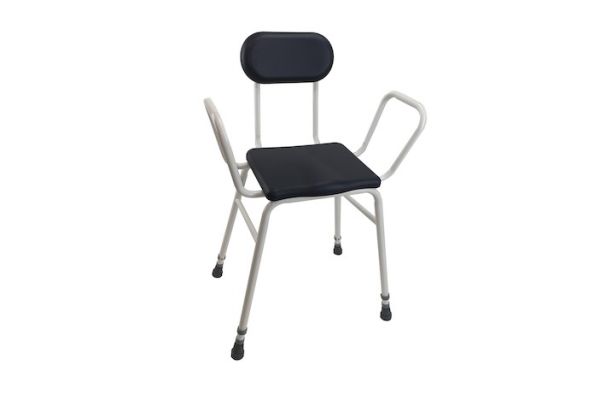
Key Perching Stool Features
A sloped or slanted seat allows users to perch on the stool and maintain good posture.
Perching stools are height‑adjustable, allowing you to perch comfortably.
The chairs have splayed or angled legs, which angle outwards for additional stability.
Things to consider
Check that the height range is suitable to allow you to obtain a comfortable seating position.
For stability, perching stools can only be used on level ground. Check that your flooring is level.
Check the size of the stool and ensure you have enough space available to prevent it from becoming a trip hazard.
Armrests are generally recommended to provide support when standing up from or sitting down on the stool.
If you wish to move the stool around the home, check that the product weight is suitable for you.
Backrests can help enhance comfort and stability when using the stool.
There is an extensive range of aluminium and steel perching stools on the market, available in a variety of designs including height‑adjustable models, folding perching stools, options with or without backrests, modular stools, bariatric perching stools, and bathroom stools. Perching stools come in a range of colours and styles to fit perfectly within your home.
At The Ramp People, we offer a selection of mobility aids, including perching stools. All of our stools are UKCA and CE marked for your peace of mind.
Perching Stools
- Armrests and backrest for additional comfort and support
- Seat height-adjustable between 545mm - 685mm
- Lightweight and portable, only 4.9kg
- Durable design, 165kg capacity
- UKCA & CE marked
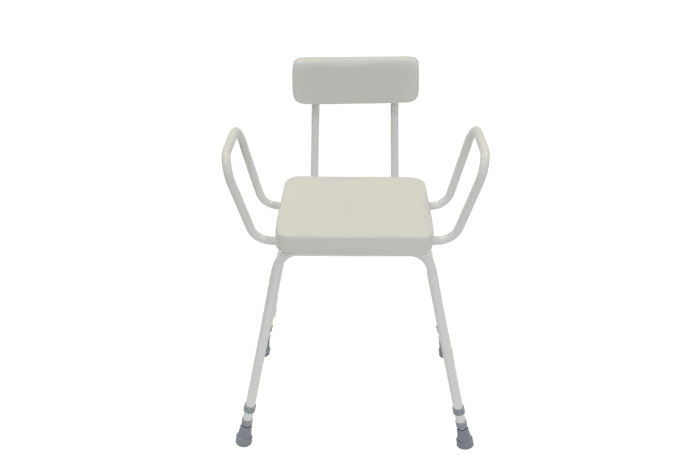
- Armrests and backrest for additional comfort and support
- Seat height-adjustable between 535mm - 680mm
- Lightweight and portable, only 5.4kg
- Durable design, 165kg capacity
- UKCA & CE marked
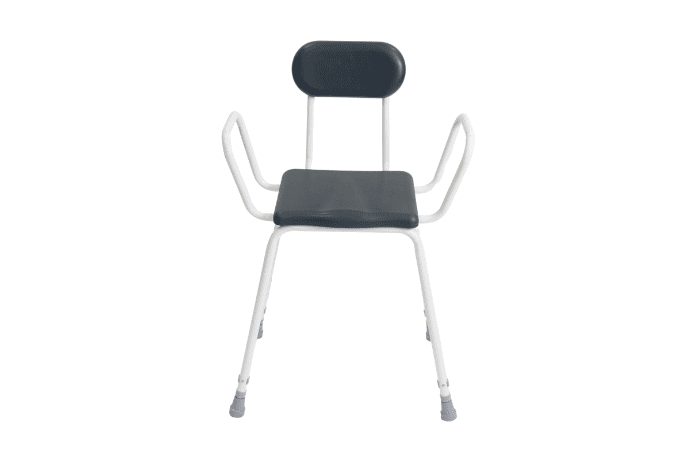
- Armrests and backrest for additional comfort and support
- Seat height-adjustable between 545mm - 685mm
- Lightweight and portable, only 6kg
- Durable design, 160kg capacity
- UKCA & CE marked
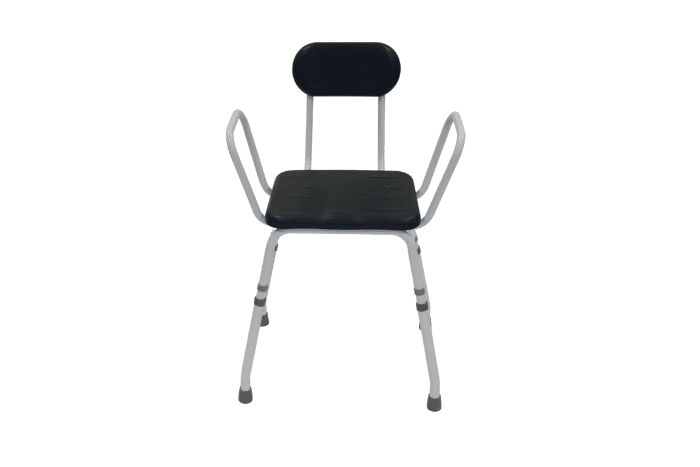
- Standard design, no armrests or backrest
- Seat height-adjustable between 545mm - 685mm
- Lightweight and portable, only 3.8kg
- Durable design, 165kg capacity
- UKCA & CE marked
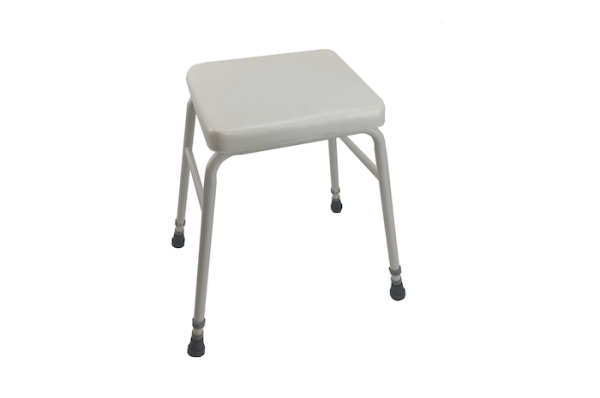
White Perching Stool
- Armrests and backrest for additional comfort and support
- Seat height-adjustable between 545mm - 685mm
- Lightweight and portable, only 4.9kg
- Durable design, 165kg capacity
- UKCA & CE marked
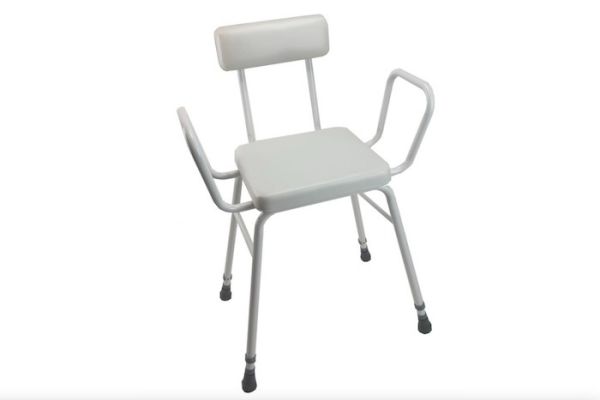
Black Perching Stool
- Armrests and backrest for additional comfort and support
- Seat height-adjustable between 535mm - 680mm
- Lightweight and portable, only 5.4kg
- Durable design, 165kg capacity
- UKCA & CE marked
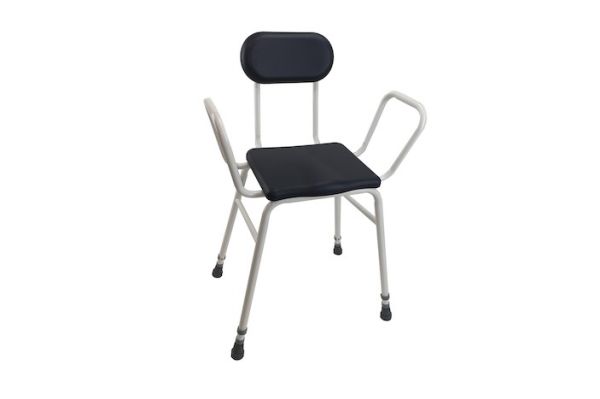
Portable Perching Stool
- Armrests and backrest for additional comfort and support
- Seat height-adjustable between 545mm - 685mm
- Lightweight and portable, only 6kg
- Durable design, 160kg capacity
- UKCA & CE marked
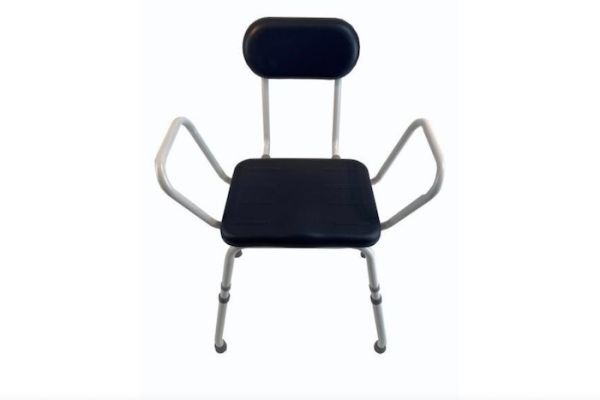
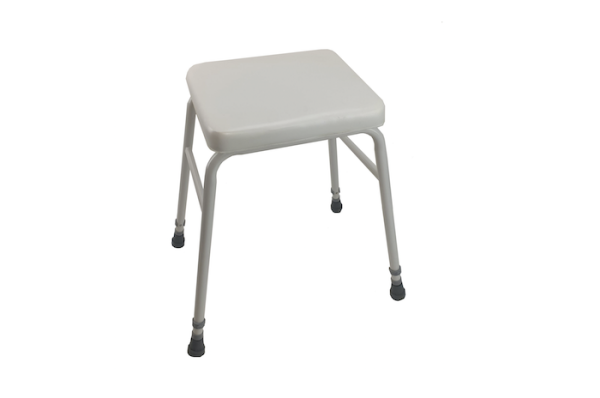
Basic Perching Stool
- Standard design, no armrests or backrest
- Seat height-adjustable between 545mm - 685mm
- Lightweight and portable, only 3.8kg
- Durable design, 165kg capacity
- UKCA & CE marked
How to Use a Perching Stool Safely
- You should always read the manufacturers recommendations prior to using the perching stool, below covers general advice for using a stool safely. Perching stools should be UKCA or CE marked, always purchase from a reputable supplier.
- Always discuss with your GP, Occupational Therapist, or Physiotherapist whether a stool is beneficial for you.
- Ensure the stool purchased in suitable for the area you wish to use it in and check the stool capacity meets your needs. For example, for bathrooms generally a specialist stool is required which is water-resistant.
- Only use the stool on flat ground. Ensure the legs are all set to the same height to ensure it is stable on the ground.
- Where armrests are provided, use both armrests to support you when sitting down or standing up from the stool to prevent it from tipping.
- Do not lean over the side or reach down towards the floor when on the stool.
Assembling Perching Stools
- In most instances, perching stools are delivered unassembled. If you are provided the stool by the NHS, your Occupational Therapist may set this up for you.
- Read your stool’s assembly guide for full instructions. In most cases, perching stools are easy to assemble and simply require you to attach the backrest, armrests, and legs to the chair. You will need to adjust the legs of the chair to suit your needs.
- The majority of chairs are adjustable using an “E‑clip.” Simply extend the legs to your required height and place the E‑clip through the relevant hole.
Cleaning Perching Stools
- Most safety stools are designed to be easy to clean, please read the manufacturers guidance for how to clean your specific chair.
- In most instances the stools can be cleaned using a non-abrasive soft cloth with a mild detergent.
VAT Relief & Financial Support
- VAT Relief - As a mobility aid, those in the UK with disabilities and long-term conditions do not need to pay VAT on mobility aids, including perching stools. When purchasing from The Ramp People simply provide your details in the VAT exemption box when you add the item to your basket, the VAT will then be removed.
- Perching Stools from the NHS - The NHS loan a range of perching stools for eligible individuals. If you require a stool we recommend speaking to your GP or Occupational Therapist. You can also apply for a needs assessment by social services who can recommend and supply various mobility aids to you. In some instances there are waiting lists for these so some users opt to purchase them privately.
- Financial Support - The government also provide a range of benefits for those with disabilities including Personal Independence Payment (PIP) and Attendance Allowance.
Request a callback
Still need assistance? Our team is available throughout the week to help via phone, email, live chat or WhatsApp. If you’d rather we call you, you can easily request a callback here.