
 Free UK Mainland Delivery on Orders Over £100* -
 Guide to Warehouse Ladders and Ladders with Platforms
When it comes to working safely and efficiently at height, choosing the right access equipment is essential. Warehouse ladders and mobile ladders with platforms and handrails offer a safe and practical solution. They work well in many places, including warehouses, stockrooms, factories, retail stores, and maintenance areas.
In this guide, we will look at the features, benefits, safety standards, and buying tips for these useful ladders. This will help you find the right model for your workplace.
What Are Warehouse and Mobile Steps with Platforms and Handrails?
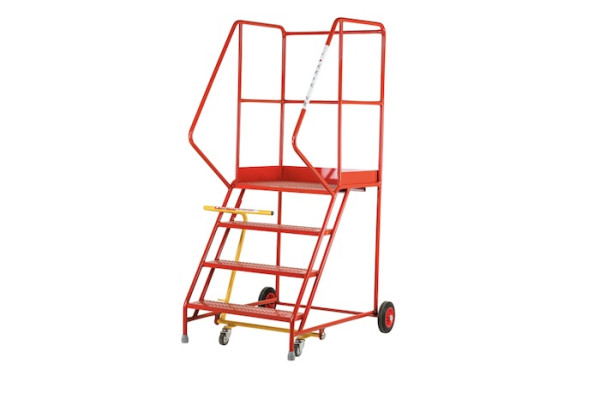
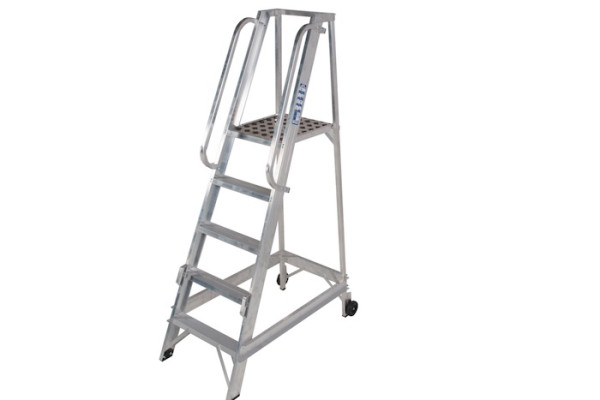
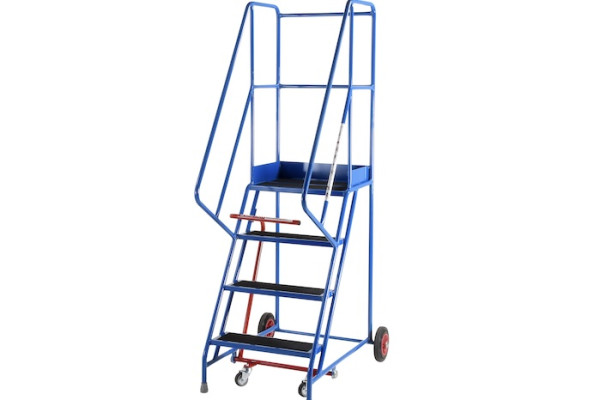
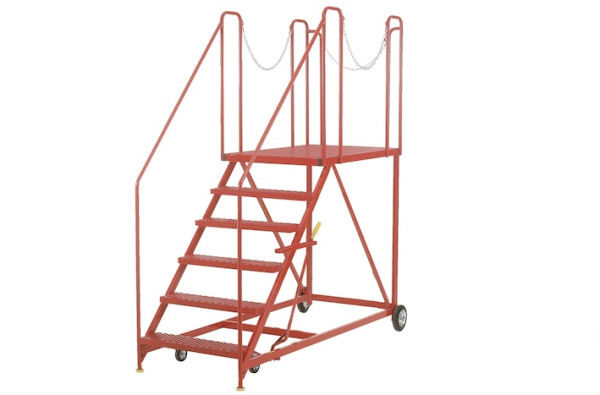
A warehouse ladder, or mobile ladder with platform and handrails is a type of portable access platform designed to allow employees to safely work at height.
Mobile ladders are different from traditional folding and telescopic ladders. They do not need support to stand. This design improves safety. Step ladders with platforms also have many safety features.
The key safety features of steps with platforms include:
- Large, non-slip platform to allow users to complete tasks comfortably
- Anti-slip treads to reduce the risk of slips
- Wheels to allow the mobile steps to easily be moved into position
- Handrails for support when climbing or descending
- Guardrails around the platform to reduce the risk of falls
These features are especially beneficial in warehouses, construction and industrial settings when users are undertaking tasks such as stock picking, maintenance and industrial tasks which require users to access a height to complete the task.


Key Benefits of Warehouse Ladders and Ladders With Platforms
- Enhanced Safety - The handrails, guardrails and large stable working platforms provide users with additional support, in turn reducing the risk of slips and falls.
- Compliant solutions - BS EN 131-7:2013 is a British and European safety standard which focuses on Mobile ladders with platforms. The standard outlines recommended for the design of mobile ladders and platforms and recommendations for how to use them safely. The standard is regularly used by ladder manufacturers, ladder designers and those undertaking quality control. Selecting a ladder which complies to the standard helps ensure workplace safety.
- Improved Efficiency - As the ladders are provided on wheels they can generally be moved into position by one person. Unlike traditional ladders they do not require any additional worker to stand at the base of the ladder to hold it as many standalone and offer lockable features meaning other team members can continue to complete other tasks whilst the ladder is in use.
- Improved Stability - The handrails and guardrails ensure users can have three-point contact with the ladder at all times.
- Durable Long-lasting Design - Built from steel or aluminium, the warehouse and trade ladders are built for frequent use in industrial settings.
Which Safety Standards and Laws Focus on Ladders in the UK?
Working at height is hazardous and therefore there are various legislations in place in the UK to protect workers.
Key UK laws and standards:
- The Work at Height Regulation 2005
- The Health and Safety at Work Act 1974
- Management of Health and Safety at Work Regulations 1999
- Provision and Use of Work Equipment Regulations 1998 (PUWER)
- BS EN 131-7:2013 - British and European safety standard which focuses on Mobile ladders with platforms
- BS EN 14183 - British and European safety standard for step stools,stair tyres and dome type step stools
Before using ladders in the workplace, always refer to your organisation’s internal health and safety policies. If needed, check with your Health and Safety Officer to see if using a ladder is necessary for the task. If your business is certified to ISO 45001, auditors will expect to see risk assessments. These should show that ladder use has been evaluated and managed properly.
Who provides guidance in the UK?
- The HSE provides guidance around the safe use of ladders and stepladders in the workplace
- The Ladder Association provides guidance around using the ladders and training


How to Choose the Right Warehouse Ladder
At The Ramp Factory we recomend considering:
- Platform Height and Working Height - Check the height of the area you need to access. Across our website, we note the platform height. The working height noted on our product listing is calculated based on 1.75m (5'8") plus platform height.
- Ladder Width - Consider the width of the area where you will be using the ladder, for example, the width of the shelves it will be placed between or loading bay. You will also need to consider any doorways the ladder will need to pass through if it is being moved from room to room.
- Material - If you wish to regularly lift and move the ladder an aluminium option will be lighter. Steel solutions are generally heavier but more robust in industrial settings.
- Mobility Features and Storage Space - Do you require the ladder on wheels or are you seeking a folding compact solution?
- Safety Features - Look for ladders with safety features such as handrails, guardrails and brakes.
Warehouse Ladder Safety Features


What Safety Checks Do Ladders Require?
Warehouse ladders should be checked and inspected daily for signs of wear and tear, they should also be checked before use.
When checking a ladder, you should check the following:
- Ensure the rungs are not bent or damaged
- Check for any loose bolts or fixings
- Verify that the brake function is working correctly
- Ensure the ladder remains clean and free from dirt, including in the wheels
- Check the ladder does not have signs of dents, twists or corrosion
- Ensure the feet remain flat on the ground
Ladders should not be used if any faults are noted, instead it is recommended faults are escalated to management and, where relevant the step manufacturer for advice.


How Do You Use a Ladder Safely?
The HSE provides detailed guidance on the safe use of ladders. Before using any ladder, it’s important to complete appropriate training and follow the manufacturer’s instructions. Key safety recommendations include:
- Carry only light tools and materials, and never exceed the ladder’s maximum safe working load (SWL)
- Avoid overreaching — always ensure the ladder is positioned at the correct height for the task.
- Maintain three points of contact at all times (for example, two feet and one hand).
- Allow only one person on the ladder at any given time.
- Set up on stable, level ground to prevent movement or tipping.
- Inspect the ladder before each use for any signs of damage, wear, or defects. Do not use the ladder if any issues are identified.
Common FAQs
What is the difference between a warehouse ladder and a step ladder?
A warehouse ladder is generally built for industrial use. It usually includes handrails and a working platform with guardrails. Generally, they are designed to stand alone without support.
What is the maximum height a ladder can be used at?
Ladders are available in various heights, for example we have ladders designed for working at heights up to 5.3m.
What is the safe working load of a ladder?
BS EN 131-7, the standard for mobile ladders with platforms, recommended a maximum safe working load (SWL) of 150kg. The SWL includes the weight of the user and any weight they are carring such as tools.
Do I require training to use a ladder?
Users should be competent to use a ladder and therefore training is recommended.
Which Warehouse Ladders and Platform Ladders Are Available From The Ramp Factory?
The Ramp Factory offers a wide range of Platform Step Ladders. They come in different heights and widths to meet your needs. Many models hold Kitemark certification to BS EN 131-7 and you can customise them on request to meet specific operational needs.
Our range has many safety features. These include double handrails, an anti-slip platform, and a stable working surface. These features help users feel more confident and safe. Ladders come either assembled or unassembled. We offer free delivery across mainland UK. You can also choose next-day delivery on many sizes.
We offer hop-up platforms and adjustable metal steps. These help with lower access needs and connect ground level to higher steps.
For expert advice on choosing the right ladder for your workplace, please contact The Ramp Factory team. We are happy to help you find the safest and most efficient solution.


Bathroom Safety Essentials: Why a Bath Step Is Worth the Investment
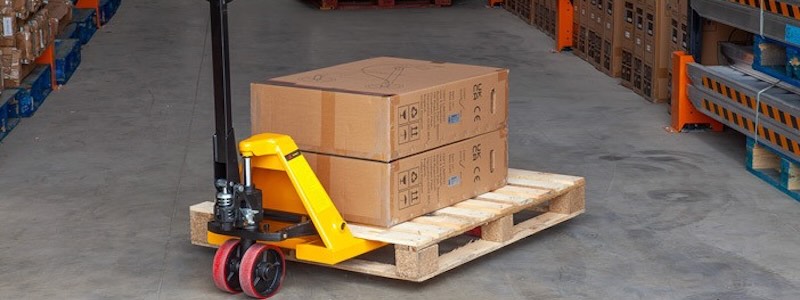
Introducing Our New Range of Heavy-Duty Pallet Trucks
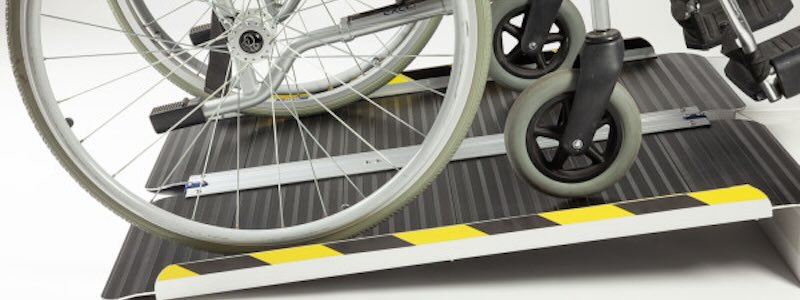
Accessibility and the Equality Act 2010: What UK Businesses Need to Know
- Categories:
- All
- Vehicle & Plant Loading Ramps
- Wheel Stops
- Workplace Safety
- Speed Bumps
- Accessibility & Disability
- Wheelchair Threshold Ramps
- Truck & Van Ramps
- Cable Covers & Protectors
- Road Safety
- Yard & Container Ramps
- TRP News
- Pet Ramps
- Car Ramps
- Tips and Product Guides
- Customer Case Studies
- Wheelchair Ramps
- Loading Ramps
- Workplace and Health & Safety