
 Free UK Mainland Delivery on Orders Over £100* -
 Accessibility and the Equality Act 2010: What UK Businesses Need to Know
Accessibility and the Equality Act 2010
Creating an accessible environment is not only good customer service and being a good employer, it is a legal responsibility for businesses across the UK. Whether it is ensuring adaptations are made for staff with disabilities or ensuring those with disabilities can access your shop or services without unnecessary barriers, it is important businesses take steps to be accessible to all.
Under the Equality Act 2010, organisations must make 'reasonable adjustments' so that those with disabilities are not placed at a disadvantage.
It is important businesses consider accessibility for all, including hidden disabilities. Simply installing an access ramp does not automatically make a business fully accessible.
What is the Equality Act?
- The Equality Act 2010 protects individuals from discrimination based on a range of protected characteristics, including disability.
- For businesses, the legislation requires service providers to make "reasonable adjustments" to ensure disabled people are not placed at a substantial disadvantage when accessing goods, services, or facilities.
- This means businesses should proactively identify barriers and take practical steps to improve accessibility where reasonable to do so.
- If companies do not comply to the Equality Act they can face legal consequences and fines.
Reasonsable Adjustments - Ideas to improve accessibility for your business
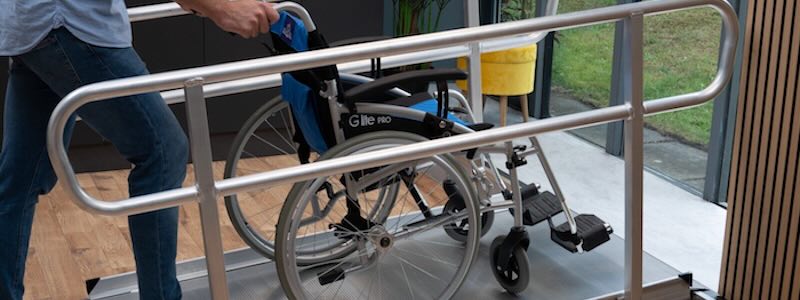
Consider step-free, ramped access, lifts and handrails.
Install a spacious wheelchair-friendly toilet with grab rails and alarm cords.
Provide a disabled parking bay close to the entrance.
Conform to the Web Content Accessibility Guidelines (WCAG)- use alt tags.
Ensure wheelchairs can easily navigate through doorways - avoid clutter.
Consider having quiet or calmer hours for neurodivergent or sensory-sensitive individuals.
Implement Personal Emergency Evacuation Plans (PEEPs. Consider evacuation chairs.
Use apps such as Be My Eyes in shops or have volunteers available to assist those with limited vision or the blind.
Lower reception desks and service desks to accommodate wheelchair users.
Textured ground surfacing designed to assist the visually impaired to navigate environments.
Add accessible signage. Ensure signage is clear, visible and in contrasting colours.
Provide Disability Awareness to your staff and ensure they know how to assist users.
If you have a team member with a disability, we always recommend speaking to them directly to identify ways you can improve accessibility for them. Companies committed to employing those with disabilities should also look at signing up to the Disability Confident employer scheme.
Why Accessibility Matters
- In the UK, it is estimated that approximately 16.8 million people live with a disability, according to government statistics for 2023–2024. This represents around 25% of the population. Businesses that fail to make their shops, offices, or workplaces accessible risk excluding a significant proportion of potential customers. By not addressing accessibility needs, they may reduce customer engagement, limit market reach, and ultimately lose sales opportunities.
- Improving accessibility is key to attracting a wider customer base and providing a positive customer experience which in turn drives repeat sales and loyalty. It also assists to protect business reputation and limit the risk of costly legal claims.
Support to Make Your Business Accessible
For employers who are hiring, or have hired, an individual with a disability, the UK government's Access to Work scheme may be able to help pay for some or all of the aids, equipment, or support the individual requires.
Some councils offer funding through local schemes to improve accessibility. For example, South Gloucestershire Council offer the Accessibility and shop front improvement grant to new and existing high street businesses to make improvements to their business to imporve accessibility.
In 2026 Brentwood Borough Council launched the Beyond the High Street Grant Fund, a £50,000 programme designed to help businesses outside the borough’s main retail centres improve their shop fronts and boost accessibility.
There is also increased support for disabled business owners and entrepreneurs. The LILAC Centre provides dedicated support to entrepreneurs who are disabled, deaf and neurodivergent.
Common Accessibility Challenges - Wheelchair Ramps
Overcoming multiple steps, especially deep steps, often needs a long ramp.
Many struggle with the uneven heights and concerns arise over damage to the doorframes.
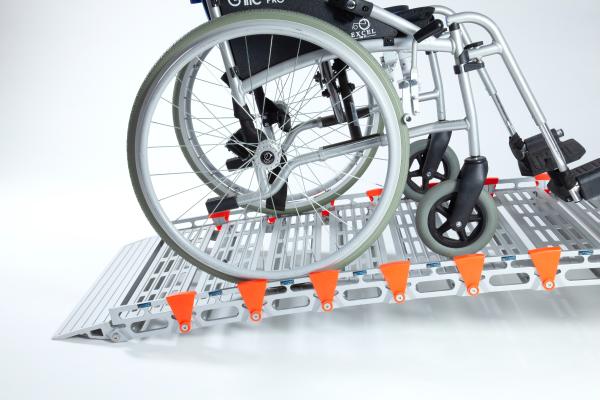
For narrow doorways normally channel ramps or a 66cm wide RollAble ramp is required.
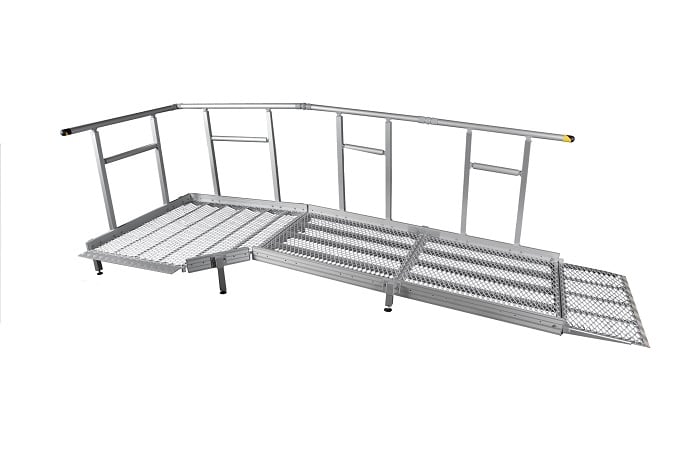
Where properties are located by a pavement, two ramps and a platform are often needed to create an L-shaped design.
Businesses often require a portable ramp but also need a lightweight solution that complies with manual handling requirements.
Where the ramp is on council land, shared areas and similar, it is important it does not become a trip hazard. In some instances licenses are required from the local council.
At The Ramp Factory we offer a wide selection of access ramps designed to overcome kerbs, steps, doorways and thresholds. Our solutions include options for multiple steps, narrow doorways, lightweight ramps, fixed ramps, ramps with handrails and more. We have a team of expert advisors on hand to provide advice, guidance and recommendations on the most suitable ramp for your area.
Types of Portable Wheelchair Ramps
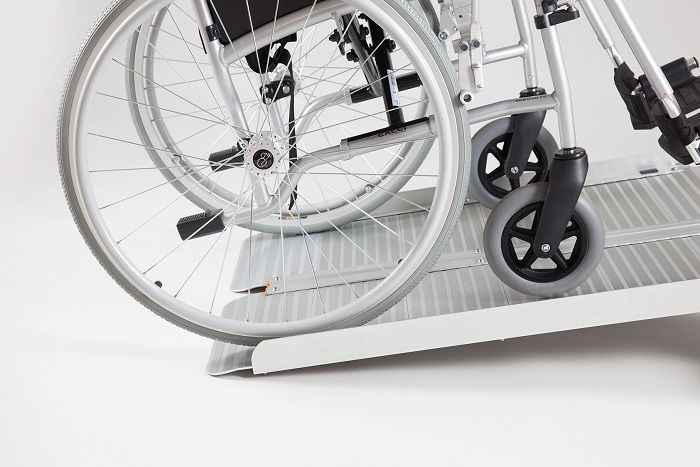
- Available in lengths from 2ft to 10ft; joining supports are available to create a longer ramp solution
- Folding design, solutions which fold lengthways and widthways to meet your storage space
- Easy to use, simply rest onto the step or kerb
- Suitable for most mobility aids
- Designed as a semi-permanent solution, leave in place for months or years
- No modifications required to the property
- Bespoke designs available including multiple turning platforms
- Purchase with or without handrails
- Generally does not require planning permission
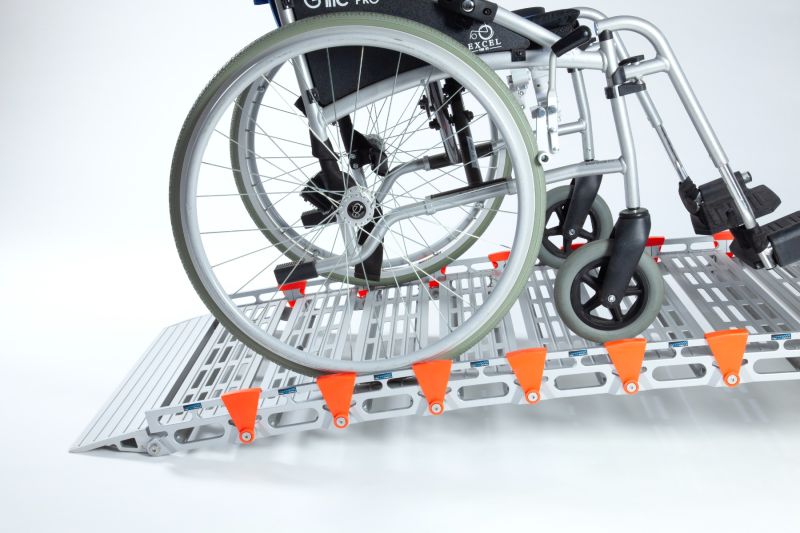
- Designed for indoor or outdoor use, can be left outside
- Available in an extensive range of lengths up to 20ft, perfect for overcoming higher areas
- Available with or without handrails
- R13 slip resistance surface for optimum grip
- Use as a straight ramp or bridge doorways and thresholds
- Available in lengths from 3ft to 12ft
- Anti-slip surface, designed for all weathers
- Fixing points, secure into position where preferred
- Use with or without handrails, perfect for all mobility aids
- Smooth entry on and off of the ramp
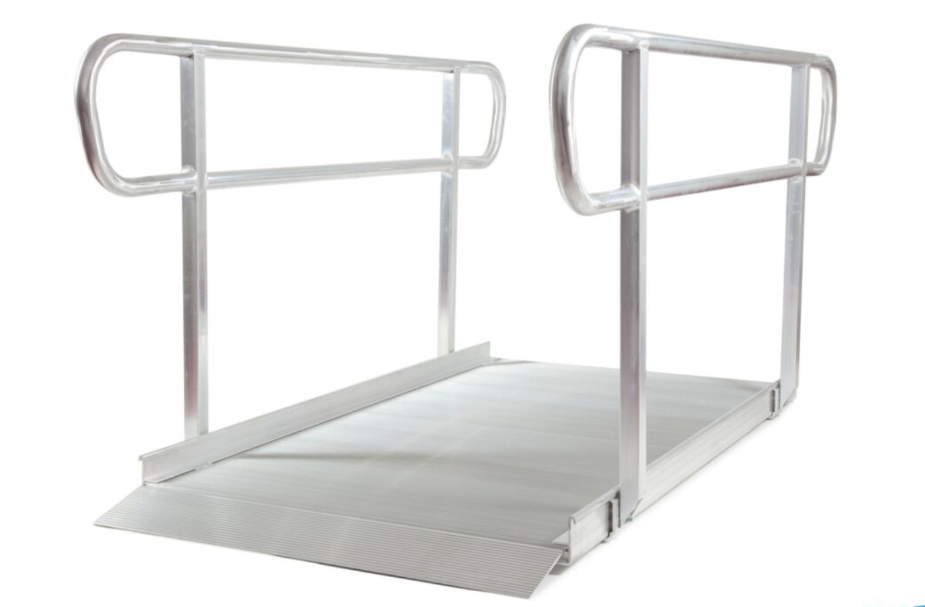
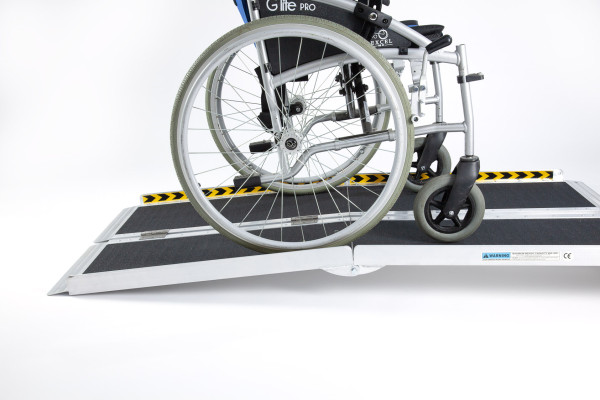
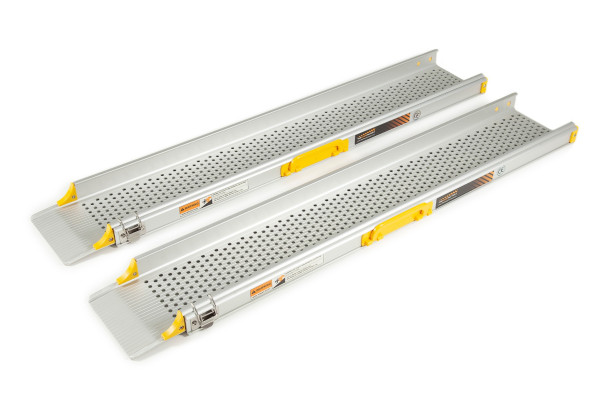
Folding Wheelchair Ramps
- Available in lengths from 2ft to 10ft - joining supports are available to create a longer ramp solution
- Folding design, solutions which fold lengthways and widthways to meet your storage space
- Easy to use, simply rest onto the step or kerb
- Suitable for most mobility aids
Modular Ramps
- Designed as a semi-permanent solution, leave in place for months or years
- No modifications required to the property
- Bespoke designs available including multiple turning platforms
- Purchase with or without handrails
- Generally does not require planning permission
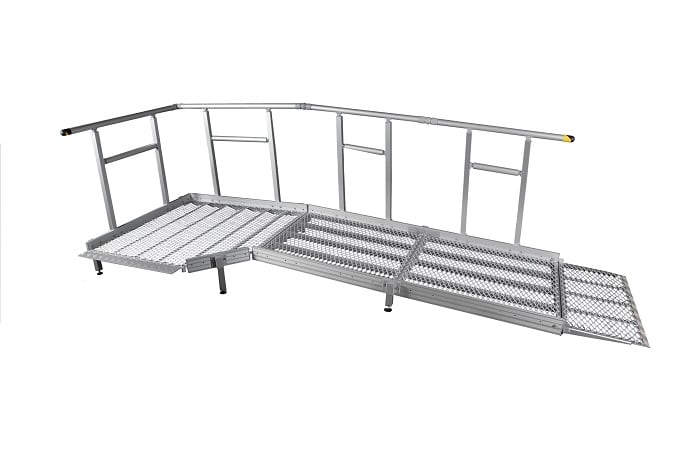
RollAble Ramps
- Designed for indoor or outdoor use, can be left outside
- Available in an extensive range of lengths up to 20ft, perfect for overcoming higher areas
- Available with or without handrails
- R13 slip resistance surface for optimum grip
- Use as a straight ramp or bridge doorways and thresholds
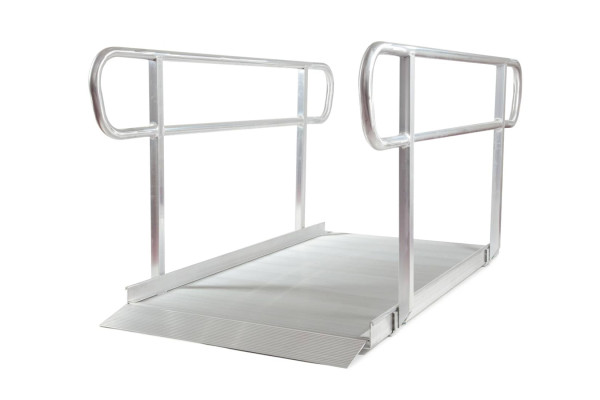
Wheelchair Ramp Kit with Handrails
- Available in lengths from 3ft to 12ft
- Anti-slip surface, designed for all weathers
- Fixing points, secure into position where preferred
- Use with or without handrails, perfect for all mobility aids
- Smooth entry on and off of the ramp
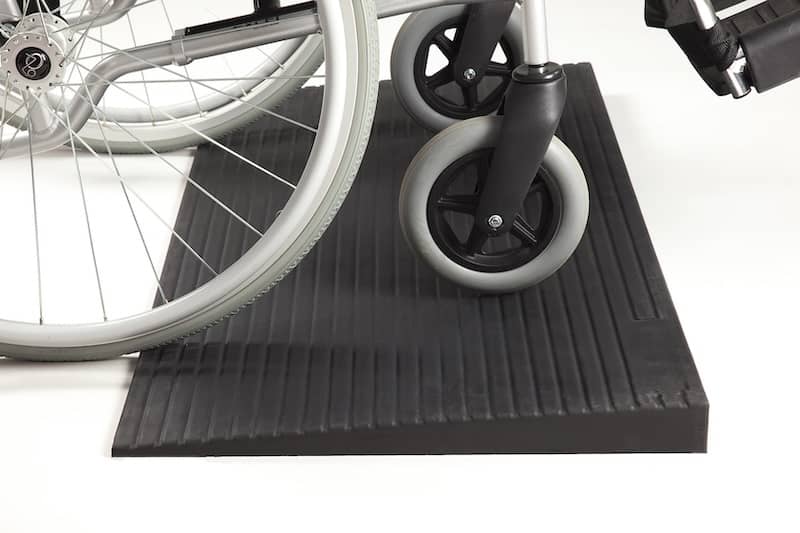
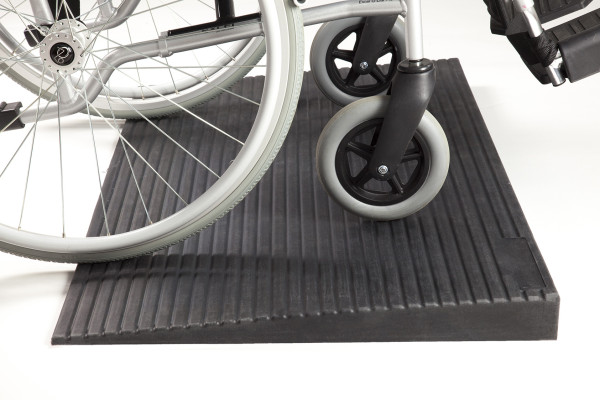
Rubber Threshold Ramps
- Available in heights from 4mm to 203mm
- Simple, effective ramp solution for lower heights including kerbs and areas with one step
- Cut to your required width with a knife or saw
- Smooth gradient perfect for mobility aids
- Perfect for indoor or outdoor use, can be left outside
Request a callback
Still need assistance? Our team is available throughout the week to help via phone, email, live chat or WhatsApp. If you’d rather we call you, you can easily request a callback here.

Do You Need Planning Permission for a Wheelchair Ramp in the UK?

Claiming VAT Relief on Mobility Aids

Overcome uPvc Door Thresholds with The Butterfly Ramp
- Categories:
- All
- Vehicle & Plant Loading Ramps
- Wheel Stops
- Workplace Safety
- Speed Bumps
- Accessibility & Disability
- Wheelchair Threshold Ramps
- Truck & Van Ramps
- Cable Covers & Protectors
- Road Safety
- Yard & Container Ramps
- TRP News
- Pet Ramps
- Car Ramps
- Tips and Product Guides
- Customer Case Studies
- Wheelchair Ramps
- Loading Ramps
- Workplace and Health & Safety