
 Free UK Mainland Delivery on Orders Over £100* -
 Do You Need Planning Permission for a Wheelchair Ramp in the UK?
Do You Need Planning Permission for a Wheelchair Ramp in the UK?
For many homeowners and businesses, installing a wheelchair ramp is one of the simplest ways to improve accessibility. Whether you’re accommodating a family member, making a workplace more inclusive, or ensuring customers can safely access your premises, ramps can provide an effective mobility solution.
In the UK many seek to make homes, businesses, offices, holiday lets and hotels wheelchair accessible but often face concerns around planning permission requirements and the costs involved in installing ramps.
Within this guide we will cover which wheelchair ramps require planning permission and which do not along with solutions to consider to make your home or business accessible, no matter the space and legal limitations in place.
Which wheelchair ramps require planning permission?
- Permanent wheelchair ramps require planning permission. These are generally concrete ramps which are installed on a long-term basis and cannot easily be removed. You may also require planning permission if the ramp is being installed on a listed building or conservation area.
- If you require a permanent wheelchair ramp, you will need to comply to Part M (access) and Part K (safety) regulations. The access ramp will need a platform, handrails and a minimum gradient of 1:12.
When is planning permission not required?
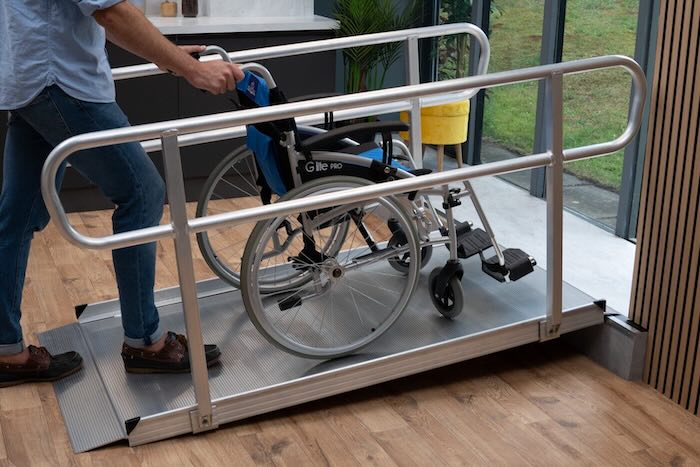
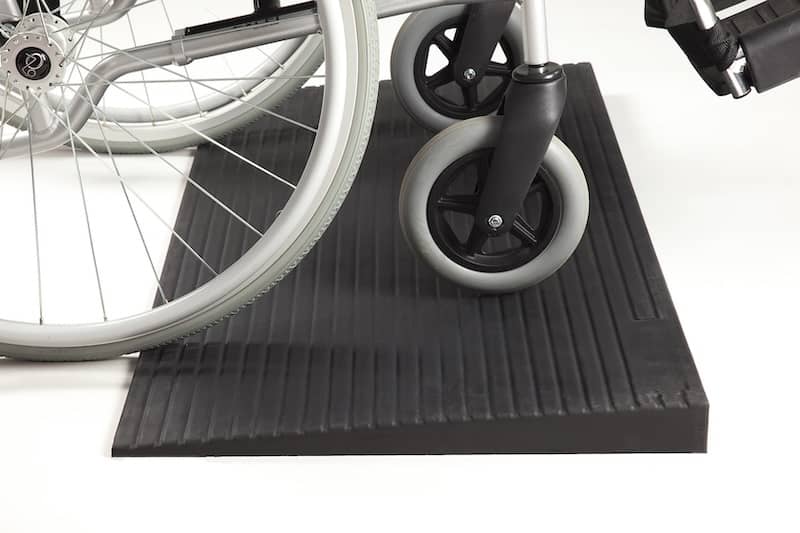
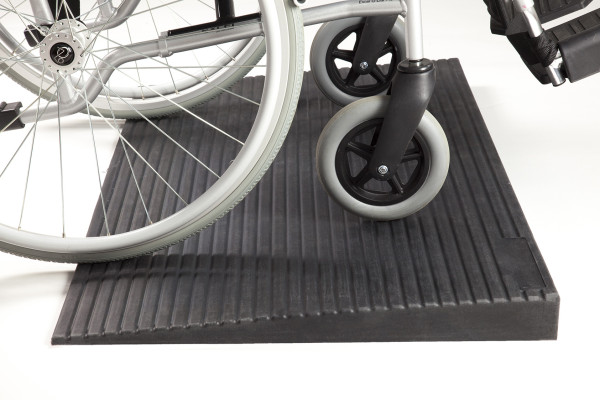
- In most cases, planning permission is not required for wheelchair ramps, particularly when they are used at domestic properties or installed on private land. For example, folding wheelchair ramps, rubber threshold ramps, and our wheelchair ramp kits with handrails are all considered portable access solutions, so planning permission is not needed.
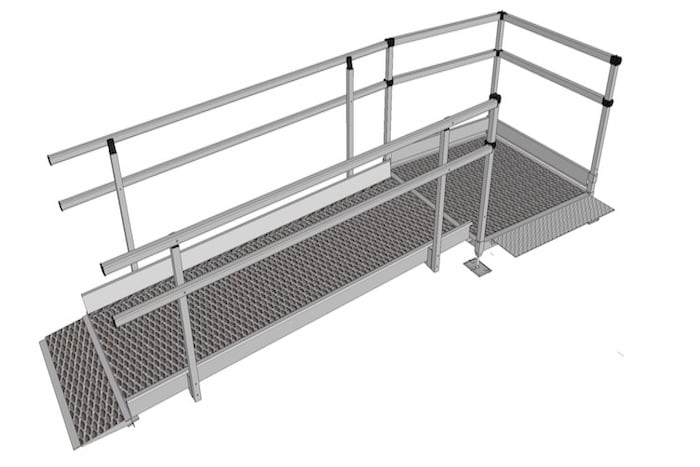
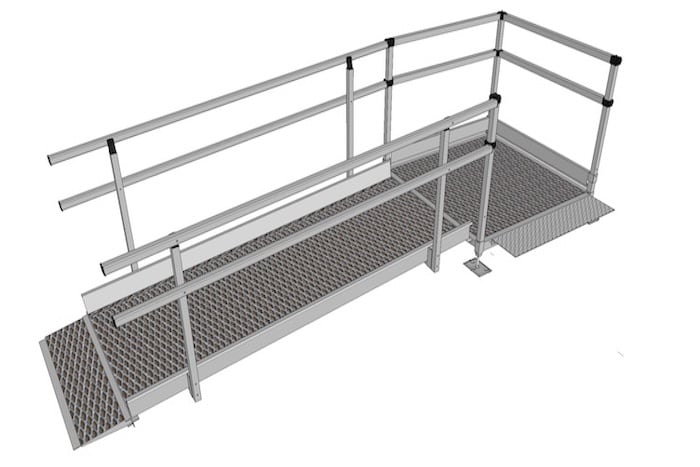
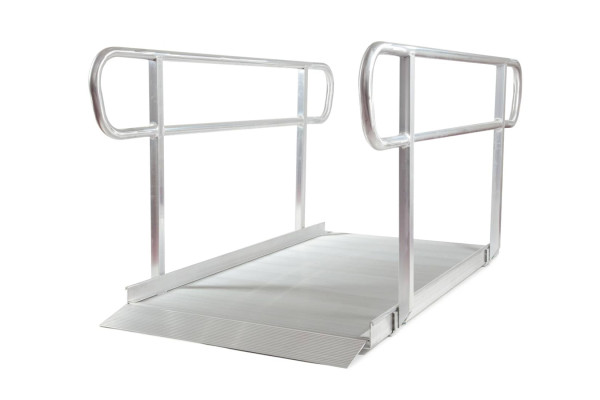
- Our modular wheelchair ramp kits, which may remain in place for several months or even years, also typically do not require planning permission. These systems are classed as ‘semi-permanent’ rather than permanent structures because they are modular in design and can be installed or removed as required. As they are not physically fixed to or altering the property, they are generally exempt from planning permission requirements.
What is the benefit of a portable ramp, or semi-permanent ramp over a permanent ramp?
As portable and semi-permanent wheelchair ramps generally do not require planning permission, they also do not need to comply with the same strict building regulations as permanent structures. This makes them a far more practical and cost-effective accessibility solution for many homes and businesses.
Another key advantage is that temporary ramp systems are often much easier to fit within the space available. Permanent wheelchair ramps that comply with building regulations are typically required to have a gradient between 1:12 and 1:20, depending on the rise and location. In many UK properties, achieving this gradient simply is not practical due to limited outdoor space. Even where space is available, a compliant permanent ramp can occupy a significant portion of the garden or driveway.
Temporary wheelchair ramps are not currently subject to the same gradient regulations, allowing for shorter and more flexible ramp solutions. From our experience, we generally recommend a minimum gradient of 1:6 for assisted wheelchairs and 1:8 for electric wheelchairs and mobility scooters. By accepting a steeper gradient where appropriate, many more wheelchair users are able to gain safe access to their property — often making the difference between maintaining independence and becoming housebound. To identify the ramp length you require, use our handy ramp length calculator.
A further benefit of temporary wheelchair ramps is their much shorter lead time. Homes and businesses can often be made accessible within days rather than months. This is particularly important for individuals returning home from hospital, where immediate accessibility can be essential. In many cases, a temporary ramp solution can provide a vital lifeline when time is critical.
Additional considerations
Although temporary ramps do not require planning permission, if the ramp will be going out onto a public pavement or street it is recommended you speak to your local council prior. In some instances permission will need to be secured as a ramp can be seen as a trip hazard. Liability insurance may also be required.
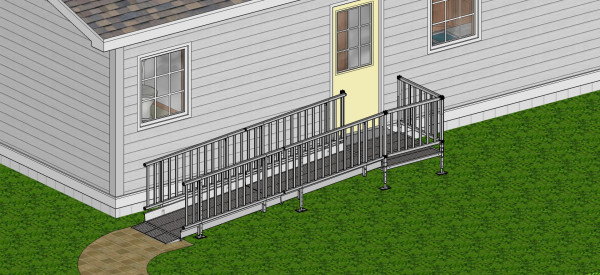
In many instances, depending on the property, it can be possible to avoid the ramp going out onto a street by using a platform and wheelchair ramp to create an L shaped design where there is not space for a straight ramp, we suggest speaking to our team for guidance around this.
At The Ramp Factory we offer an extensive range of portable and semi-permanent access solutions including folding ramps which are just put down when needed and semi-permanent solutions which can be left in place for several months and years.
As mobility aids, all of the ramps are available to purchase with VAT relief.
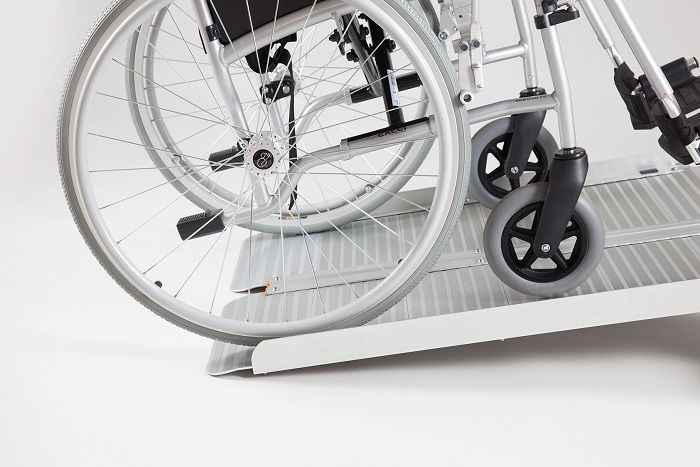
Types of Portable & Semi-Permanent Access Ramps
- Available in lengths from 2ft to 8ft
- Designed for overcome steps, kerbs and doorways
- Easy to use, simply rest in place
- Designed as a portable solution, put in place when needed
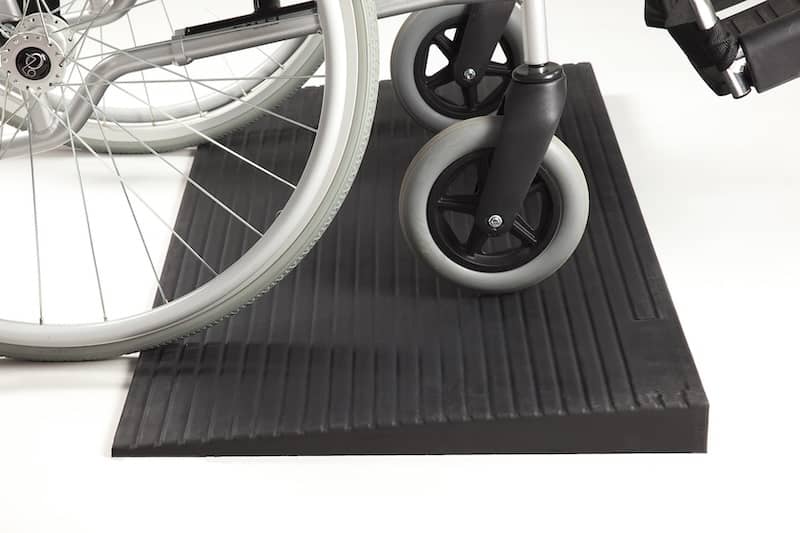
- Designed for lower heights up to 203mm / 8"
- Easy to use, simply rest in place
- Designed for indoor or outdoor use, can be left outside
- Use as portable ramp or leave in place
- Available in lengths from 2ft to 12ft
- Anti-slip surface, designed for all weathers
- Fixing points, secure into position and leave in place
- Use with or without handrails, perfect for all mobility aids
- Smooth entry on and off of the ramp
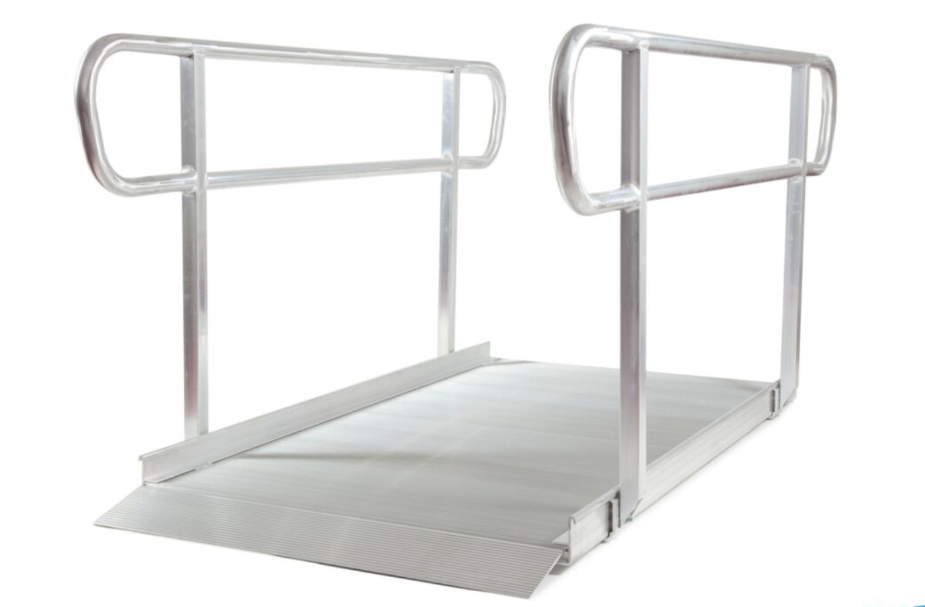
- Built to order based on your home or business, speak to our team for a quote
- Solutions with turning platforms and handrails
- Semi-permanent solution, leave in place for months or years
- Choice of widths available
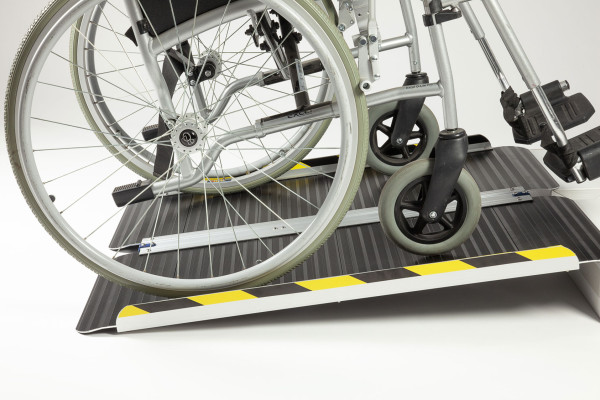
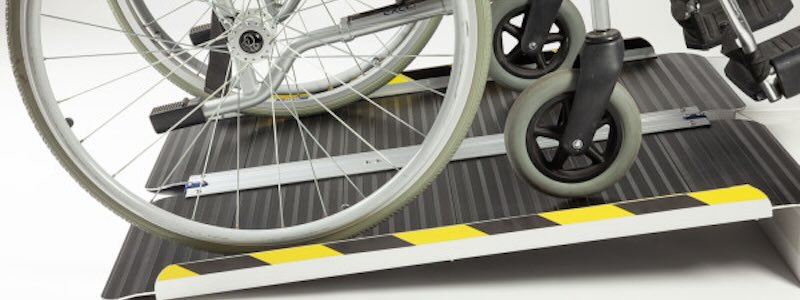
Folding Wheelchair Ramps
- Effortlessly folds for easy storage, built on carry handle
- Full width non-slip surface for extra safety
- Safety edges to enhance safety
- Easy to use, simply rest onto the step or kerb
- 300kg capacity, TÜV tested
- Suitable for most mobility aids
Rubber Threshold Ramps
- Designed for lower heights up to 203mm / 8"
- Easy to use, simply rest in place
- Designed for indoor or outdoor use, can be left outside
- Use as portable ramp or leave in place
Wheelchair Ramp Kit with Handrails
- Available in lengths from 3ft to 12ft
- Solid, non-folding design
- Pre-drilled fixing points to allow the ramp to be secured in place, can be left outside
- Use with or without handrails, perfect for all mobility aids
- Smooth entry on and off of the ramp
Modular Wheelchair Ramps
- Built to order based on your home or business, speak to our team for a quote
- Solutions with turning platforms and handrails
- Semi-permanent solution, leave in place for months or years
- Choice of widths available
Request a callback
Still need assistance? Our team is available throughout the week to help via phone, email, live chat or WhatsApp. If you’d rather we call you, you can easily request a callback here.
Accessibility and the Equality Act 2010: What UK Businesses Need to Know

Claiming VAT Relief on Mobility Aids

Overcome uPvc Door Thresholds with The Butterfly Ramp
- Categories:
- All
- Vehicle & Plant Loading Ramps
- Wheel Stops
- Workplace Safety
- Speed Bumps
- Accessibility & Disability
- Wheelchair Threshold Ramps
- Truck & Van Ramps
- Cable Covers & Protectors
- Road Safety
- Yard & Container Ramps
- TRP News
- Pet Ramps
- Car Ramps
- Tips and Product Guides
- Customer Case Studies
- Wheelchair Ramps
- Loading Ramps
- Workplace and Health & Safety